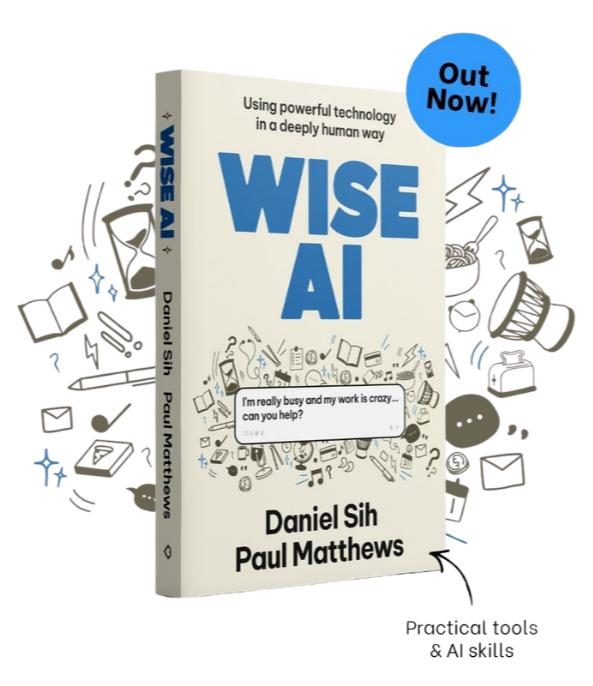
USING POWERFUL TECHNOLOGY IN DEEPLY HUMAN WAYS
Artificial Intelligence is changing the way we work in remarkable ways. From drafting emails and summarising meetings to brainstorming ideas and analysing information, AI is rapidly becoming an essential part of everyday knowledge work.
But while AI can help us work faster, many teams are discovering a deeper challenge:
Saving time on tasks does not automatically reduce busyness.
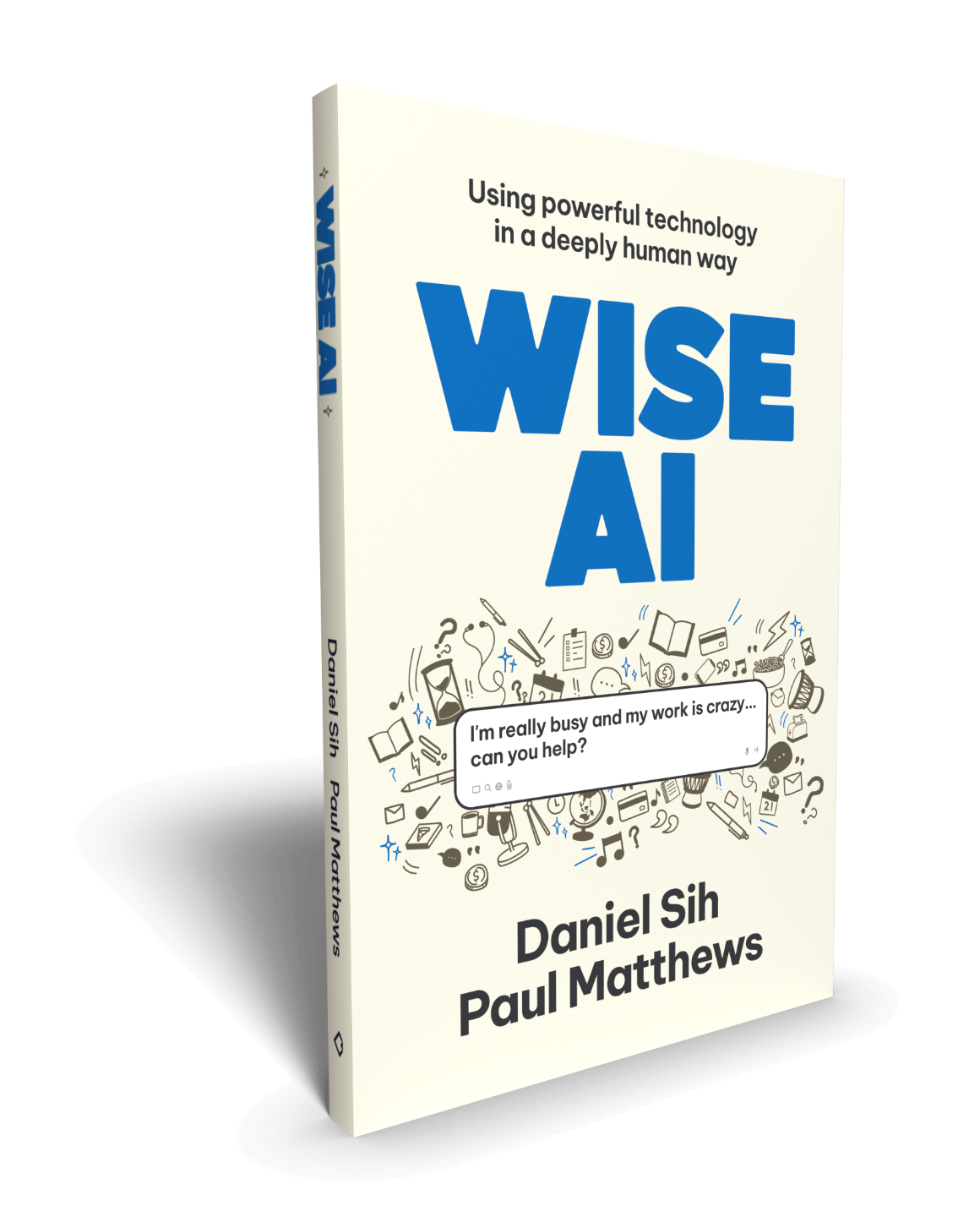
AI Foundations is a practical introduction to using AI thoughtfully and effectively, based on Daniel Sih and Paul Matthews acclaimed book.
Participants learn the philosophy, principles, and practices of Wise AI, gaining hands-on experience using tools such as Microsoft Copilot, ChatGPT, or similar AI platforms.
The course is designed for beginners through to intermediate users who want to think deeply about their AI use, build greater confidence and understanding in using AI well... to make space.

Based on the new book by Daniel Sih and Paul Matthews
"A clear, practical framework for using AI in a human way without letting it redefine your priorities."
- Nir Eyal, New York Times Bestselling author of Beyond Belief and Indistractable
THE RIGHT FOUNDATIONS
This course provides the foundations every team needs to use AI well. Wise AI requires more than knowing how to prompt or navigate the technical features of AI tools. It requires thoughtful judgement about how and why we use AI, so we can harness its potential without losing our organic intelligence or creating unnecessary work.
Our facilitators help teams build confidence using AI in practical and productive ways, while recognising that AI platforms are evolving rapidly and features change constantly.
Instead, the focus is on developing strong foundational skills, healthier workflows, practical AI habits, reflective thinking, and the confidence to apply Wise AI principles using Copilot, Claude, Gemini or ChatGPT within your own workplace context.
AI FOUNDATIONS IS DESIGNED FOR:
• Professionals and knowledge workers
• Administration and support staff
• Teams beginning to explore AI adoption
• Self-taught AI users wanting stronger foundations
HERE'S WHAT WE COVER
Section 1 - Philosophy of Wise AI
From Faster Work to Better Work
This opening session helps participants step back and think critically about AI before rushing into tools and tactics.
Rather than asking, “How do we use AI faster?”, we explore a deeper question: “How do we use AI to improve the quality of our work and lives?”
Topics Include:
- What is Large Language Model Artificial Intelligence
- Why AI will intensify and expand your workload unless you think differently
- The mindset shift from Default AI to Wise AI
- Understanding hallucinations, bias, and AI limitations
- The four rhythms of Wise AI: deep work, deep thought, deep rest, and deep relationships
Learning Outcome:
Participants develop a healthier mental model for using AI intentionally, rather than reactively.
Section 2 — Principles of Wise AI
Building Better Foundations for AI Use
This session introduces ten key principles behind Wise AI use.
Topics Include:
- The Plan-Do-Review cycle
- RTF prompting (Role, Task, Format)
- Iteration and refinement
- Tweak by hand
- Options, not answers
- Tasks, not jobs
- Verify AI with Organic Intelligence (OI)
- Watch for AI bias
- Data continence (security and confidentiality)
- Do hard things without AI
Learning Outcome:
Participants gain practical frameworks and principles that improve the quality, usefulness, and safety of AI outputs.
Section 3 — Practices of Wise AI
Hands-On Learning and Real-World Application
The final session focuses on practical experimentation and skill development.
Participants apply Wise AI principles directly to their own work context while building confidence through guided practice.
Activities Include:
- Guided AI exercises using an agreed workplace AI tool
- Individual experimentation using workplace examples
- Prompt writing practice
- Improving and refining outputs
Common Use Cases:
- Email drafting and refinement
- Summarising meetings and documents
- Brainstorming and ideation
- Writing support
- Planning and prioritisation
- Communication improvement
Learning Outcome:
Participants leave with increased confidence, practical capability, and a mandate to continue experimenting with Wise AI practices in the workplace.